The Shift in Innovation Thinking for 2026
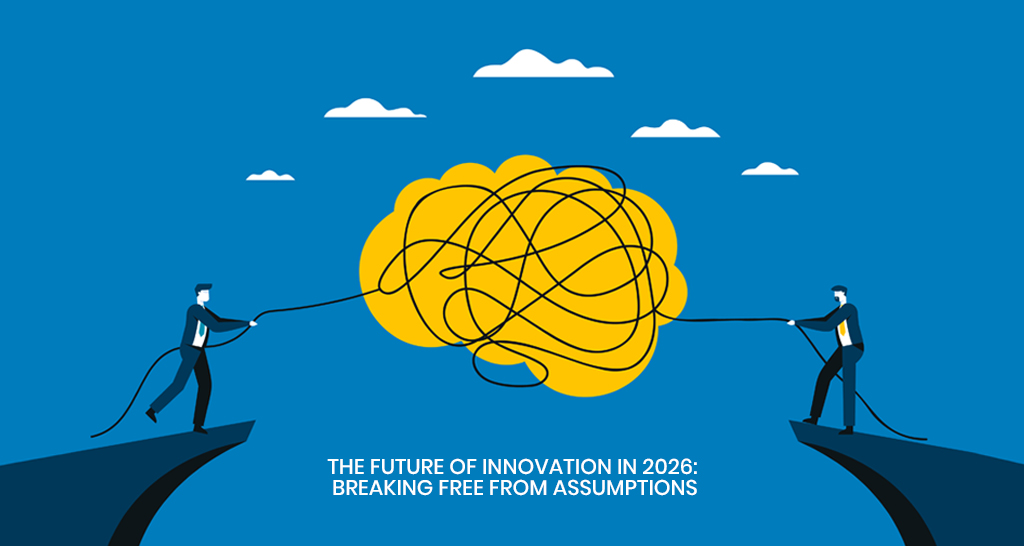
The future of innovation in 2026 is no longer driven by speed or scale alone, but by a deeper shift in how businesses think. Traditional approaches that once rewarded efficiency and repetition are losing relevance in a world defined by constant disruption. Innovation today demands questioning long-standing beliefs and embracing uncertainty as a strategic advantage rather than a risk.
What truly separates innovative organizations in 2026 is their ability to move beyond comfort zones. Instead of asking how to improve existing models, leaders are asking whether those models still make sense at all. This mindset shift allows companies to explore new value propositions, rethink workflows, and adapt faster to changing market realities.
Challenging the Myth of Knowing the Customer
One of the most limiting assumptions in business is the belief that companies already understand their customers. In 2026, consumer behavior is evolving faster than ever, shaped by technology, global influences, and rising expectations. Relying on past insights often leads to misaligned products and missed opportunities.
Forward-thinking organizations are breaking this assumption by building constant feedback into their processes. They prioritize real-time data, user testing, and open communication channels. By treating customer understanding as an ongoing process rather than a fixed truth, businesses stay relevant and responsive in a competitive landscape.
Redefining the Role of Technology in Innovation
Technology is often mistaken for innovation itself, but in reality, it is only a tool. In 2026, AI, automation, and advanced analytics are widely available, making differentiation harder for those who rely on technology alone. Innovation now depends on how thoughtfully these tools are applied.
Companies that break free from the assumption that “new technology equals innovation” focus instead on outcomes. They use technology to simplify experiences, reduce friction, and create measurable value. This shift ensures that innovation remains purposeful rather than driven by hype or trends.
From Big Ideas to Continuous Experimentation
The assumption that innovation requires massive investments and perfect execution is rapidly fading. In 2026, organizations are realizing that large, rigid plans often slow progress rather than accelerate it. Flexibility and speed have become more valuable than certainty.
Successful innovators embrace small, low-risk experiments that encourage learning. By testing ideas quickly and refining them based on feedback, they reduce failure costs and increase adaptability. Innovation becomes a continuous journey rather than a one-time breakthrough.
The Power of Diverse Perspectives
Homogeneous thinking reinforces outdated beliefs, while diversity challenges them. In 2026, innovation is increasingly driven by teams that bring together different backgrounds, skills, and viewpoints. This diversity helps uncover blind spots that traditional thinking often overlooks.
Organizations that value inclusive collaboration create environments where questioning assumptions is encouraged. When multiple perspectives are heard and respected, ideas evolve faster and solutions become more resilient. Diversity is no longer a social initiative—it is a strategic advantage.
Unlearning as the Foundation of Future Innovation
At its core, innovation in 2026 is about unlearning what no longer works. Holding onto outdated methods simply because they once delivered success can limit growth. Breaking free from assumptions requires humility and a willingness to change direction.
The most innovative individuals and organizations understand that learning never stops. By staying curious, open-minded, and adaptable, they are better equipped to navigate uncertainty. In a future defined by rapid change, unlearning becomes the foundation for long-term innovation and success.