Rise of Smart Hotel Technology
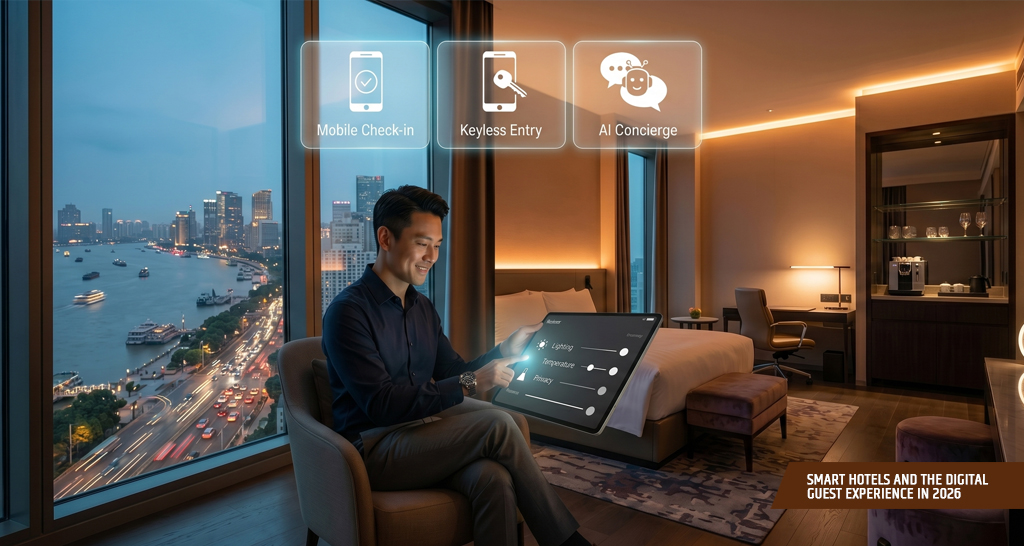
The hospitality industry in 2026 is rapidly embracing smart technology to improve guest experiences and operational efficiency. Modern hotels are integrating AI-powered systems, mobile check-ins, digital room keys, and voice-controlled rooms to create seamless and personalized stays for travelers.
Guests today expect convenience, speed, and flexibility throughout their journey. Smart hotels are meeting these expectations by reducing waiting times, offering contactless services, and using technology to personalize every aspect of the guest experience.
Smart hotel technology is also helping hospitality brands stay competitive in a fast-changing travel market. Hotels that invest in digital innovation are improving customer satisfaction, strengthening brand loyalty, and attracting modern travelers who prefer technology-driven experiences.
AI-Powered Personalization
Artificial Intelligence is transforming how hotels understand and serve guests. Hotels can now analyze guest preferences, booking history, and behavior patterns to provide customized recommendations and tailored services.
From personalized room settings to curated dining suggestions and automated concierge support, AI is helping hotels create more memorable and engaging guest experiences while improving customer satisfaction and loyalty.
AI also enables hotels to anticipate guest needs before they even make requests. Predictive technology allows hospitality brands to deliver proactive service, creating smoother experiences that make guests feel valued and understood throughout their stay.
Contactless and Digital Convenience
Contactless hospitality continues to grow in 2026 as travelers increasingly prefer digital-first experiences. Mobile check-ins, QR-code services, digital payments, and smartphone room access are becoming standard features in smart hotels worldwide.
These technologies not only improve convenience for guests but also allow hotel staff to focus more on personalized interactions instead of routine administrative tasks, creating a smoother and more efficient hospitality environment.
Digital convenience also enhances guest safety and flexibility. Travelers appreciate having greater control over their hotel experience through mobile apps and self-service technology, making their stay faster, easier, and more comfortable.
Smart Hotels and Sustainability
Smart hotel technology is also supporting sustainable hospitality practices. Energy-efficient systems, smart lighting, automated climate control, and IoT-powered resource management are helping hotels reduce energy consumption and environmental impact.
Eco-conscious travelers are increasingly choosing hotels that combine luxury, technology, and sustainability. As a result, smart hotels are becoming important drivers of responsible tourism and long-term operational efficiency.
Many hotels are now using smart systems to monitor water usage, reduce waste, and optimize energy consumption in real time. These innovations not only lower operational costs but also help hospitality brands build stronger environmental responsibility and global sustainability commitments.
The Future of Digital Hospitality
The future of hospitality will continue becoming more connected, intelligent, and personalized. Technologies such as AI, IoT, robotics, and predictive analytics will further redefine how guests interact with hotels and travel brands.
However, even in a highly digital world, human connection will remain at the heart of hospitality. The most successful smart hotels in 2026 will be those that balance advanced technology with authentic and meaningful guest experiences.
As guest expectations continue evolving, hospitality brands must focus on combining innovation with emotional connection. The future of digital hospitality is not just about smart technology — it is about creating smarter, more human-centered travel experiences.