
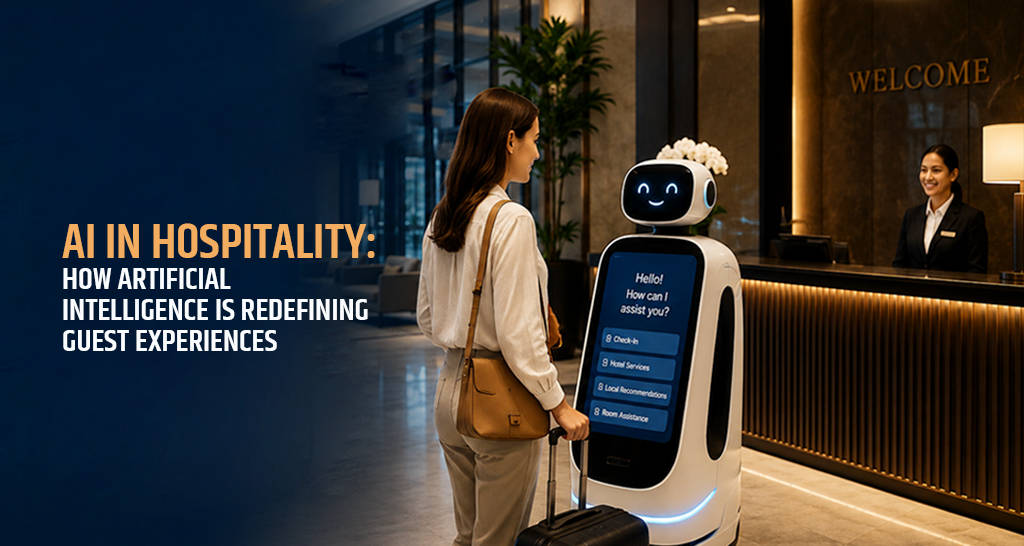
The hospitality industry has always been centered around delivering exceptional guest experiences. Today, Artificial Intelligence (AI) is transforming how hotels, resorts, and hospitality businesses interact with guests, streamline operations, and create personalized experiences. From AI-powered chatbots to smart room technology, AI is becoming a key driver of innovation in the hospitality sector.
The Growing Role of AI in Hospitality
As guest expectations continue to evolve, hospitality businesses are leveraging AI to provide faster, more efficient, and highly personalized services. AI helps hotels analyze guest preferences, predict needs, and deliver tailored recommendations, enhancing overall satisfaction and loyalty.
Personalized Guest Experiences
One of the most significant advantages of AI is its ability to personalize the guest journey. By analyzing booking history, preferences, and behavior patterns, AI can recommend room upgrades, dining options, local attractions, and special offers that match individual guest interests.
For example, returning guests may receive customized room settings, preferred dining suggestions, or exclusive promotions based on previous stays, creating a more memorable and personalized experience.
AI-Powered Customer Service
AI-driven chatbots and virtual assistants are revolutionizing customer service in hospitality. These tools provide instant responses to guest inquiries, assist with bookings, answer frequently asked questions, and offer support 24/7.
Whether a guest needs information about hotel amenities, local attractions, or reservation changes, AI-powered systems ensure quick and efficient assistance without long wait times.
Smart Rooms and Connected Experiences
The rise of smart hotel rooms is another example of AI’s impact on hospitality. Guests can control lighting, temperature, entertainment systems, and room services through voice commands or mobile applications.
AI-enabled smart rooms create greater convenience, comfort, and personalization, allowing guests to customize their environment according to their preferences.
Enhancing Operational Efficiency
Beyond guest-facing services, AI plays a crucial role in improving hotel operations. AI-powered systems can optimize staff scheduling, manage inventory, forecast demand, and automate repetitive administrative tasks.
This increased efficiency allows hospitality teams to focus more on delivering exceptional guest experiences while reducing operational costs.
Revenue Management and Dynamic Pricing
AI is transforming hotel revenue management by analyzing market trends, competitor pricing, occupancy rates, and booking patterns in real time. Hotels can use AI-driven dynamic pricing strategies to maximize revenue while remaining competitive in the market.
Accurate demand forecasting also helps hotels make informed business decisions and improve profitability.
Improving Safety and Security
AI technologies contribute to enhanced safety and security through facial recognition, intelligent surveillance systems, and automated monitoring tools. These solutions help identify potential security concerns and ensure a safer environment for guests and staff.
Challenges and Considerations
While AI offers numerous benefits, hospitality businesses must also address challenges such as data privacy, cybersecurity, and maintaining the human touch that guests value. Successful implementation requires balancing technological innovation with genuine human interaction.
The Future of AI in Hospitality
As AI technology continues to advance, its role in hospitality will only expand. Hotels that embrace AI-driven solutions will be better positioned to meet evolving guest expectations, improve operational efficiency, and stay competitive in a rapidly changing industry.
The future of hospitality lies in combining intelligent technology with personalized service. By leveraging AI effectively, hospitality businesses can create seamless, memorable, and highly customized guest experiences that drive long-term loyalty and success.
Conclusion
Artificial Intelligence is no longer a futuristic concept—it is a reality that is reshaping the hospitality industry today. From personalized recommendations and smart rooms to automated customer service and operational optimization, AI is redefining how hotels engage with guests. As the industry continues to evolve, organizations that successfully integrate AI while preserving authentic human connections will lead the next generation of hospitality excellence.