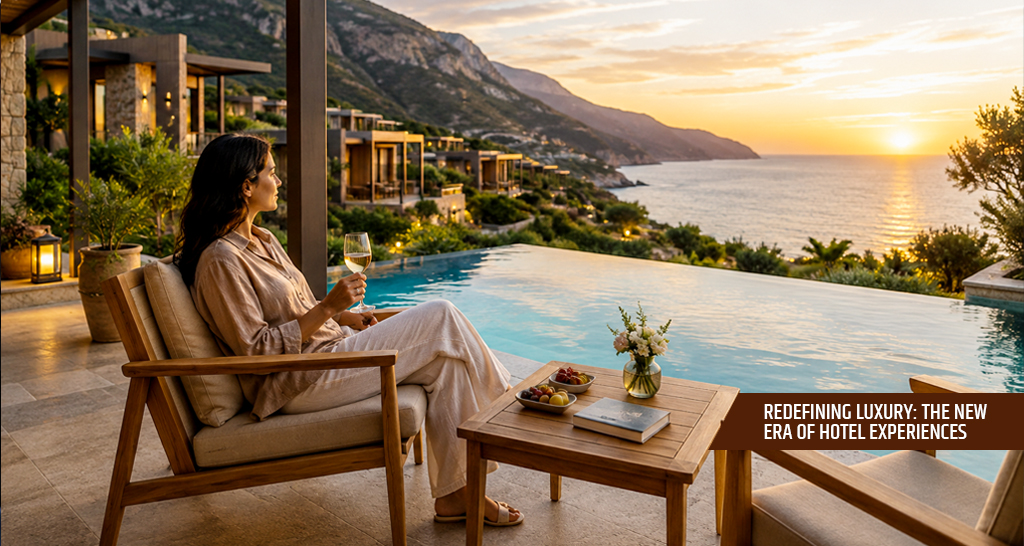
Luxury hospitality is entering a new era—one where exceptional service is no longer defined simply by grand lobbies, expensive interiors, or five-star amenities. Today’s luxury traveler is looking for something far more meaningful: personalization, authenticity, privacy, convenience, and memorable experiences. The modern definition of luxury is shifting from what a hotel provides to how it makes a guest feel.
For hoteliers, this transformation represents both a challenge and an opportunity. Guests increasingly expect hotels to understand their preferences, anticipate their needs, and create experiences that feel personal rather than standardized. A personalized welcome, a thoughtfully designed itinerary, a preferred room setting, or a meaningful local experience can often create a stronger impression than another expensive facility. In this new environment, attention to detail has become one of the most valuable forms of luxury.
From Opulence to Personalization
Traditional luxury hospitality often focused on visible indicators of exclusivity—large suites, premium materials, fine dining, and sophisticated architecture. While these elements remain important, they are no longer enough to differentiate a luxury property.
The next generation of luxury is increasingly experience-driven and personalized. Hotels are using guest preferences, behavioral insights, and technology to deliver more relevant experiences. From customized dining recommendations to personalized wellness programs and tailored room amenities, hotels can create stays that feel uniquely designed for each guest.
The goal is not simply to collect guest data but to use information intelligently and responsibly to provide better service. When technology operates quietly behind the scenes, the guest experiences the result as effortless hospitality.
Technology With a Human Touch
Artificial intelligence, automation, mobile applications, smart rooms, and digital concierge services are reshaping hotel operations. Yet technology alone does not define modern luxury.
The most successful luxury hotels will be those that combine technological convenience with genuine human connection. A guest may appreciate mobile check-in, but they also value a staff member who remembers their name. They may enjoy a smart room, but they will remember the employee who went beyond expectations to solve a personal request.
This creates an important principle for modern hoteliers: technology should enhance hospitality, not replace it.
The future of luxury will therefore be a carefully balanced ecosystem where technology handles repetitive processes while employees focus on empathy, creativity, problem-solving, and relationship building.
Authenticity Becomes the New Status Symbol
Luxury travelers are increasingly seeking experiences that feel authentic and connected to the destination. Instead of simply staying inside a beautiful property, guests want to discover the culture, cuisine, history, craftsmanship, and personality of the location.
This presents an opportunity for hotels to become more than accommodation providers—they can become curators of local experiences.
A luxury hotel might introduce guests to local chefs, arrange private cultural experiences, showcase regional craftsmanship, or design exclusive excursions. These experiences create emotional connections that cannot easily be replicated by competitors.
In this sense, authenticity itself becomes a form of luxury.
Wellness, Privacy and Meaningful Experiences
Modern luxury is also becoming more personal and wellness-oriented. Travelers are increasingly looking for experiences that support their physical and mental well-being.
Luxury hotels are responding with personalized wellness programs, spa experiences, healthy culinary options, fitness facilities, sleep-focused amenities, and tranquil environments. Privacy has also become increasingly valuable, particularly for high-profile and affluent travelers.
The future luxury guest may value peace, privacy, time, and well-being as much as material comfort.
Sustainability Without Compromising Luxury
Sustainability is also changing the meaning of luxury. Today, responsible hospitality can coexist with premium experiences.
Luxury hotels are exploring energy-efficient operations, sustainable sourcing, reduced waste, locally produced products, water conservation, and environmentally responsible design. The challenge is to implement sustainability without making guests feel that they are sacrificing comfort.
The most sophisticated approach is to make sustainability almost invisible—allowing guests to enjoy an exceptional experience while knowing that their stay has been designed with greater environmental responsibility.
The New Role of the Hotelier
As luxury evolves, the role of the hotelier is evolving with it. Modern hotel leaders must think beyond occupancy rates and operational efficiency. They must understand consumer behavior, technology, employee culture, sustainability, brand storytelling, and experience design.
The successful hotelier of tomorrow will be part strategist, part technologist, part storyteller, and part relationship builder.
Most importantly, they will understand that luxury is not created by adding more—it is created by making every detail matter.
Conclusion
The new era of hotel luxury is not about competing over who can offer the biggest suite, the most expensive amenities, or the grandest architecture. It is about creating experiences that are personal, authentic, seamless, responsible, and emotionally memorable.
For hotel brands and hospitality leaders, the opportunity is clear: redefine luxury around the individual guest.
Because in the future of hospitality, the ultimate luxury may not be something a guest can take home. It may simply be the feeling that, for a few unforgettable days, everything was designed just for them.