
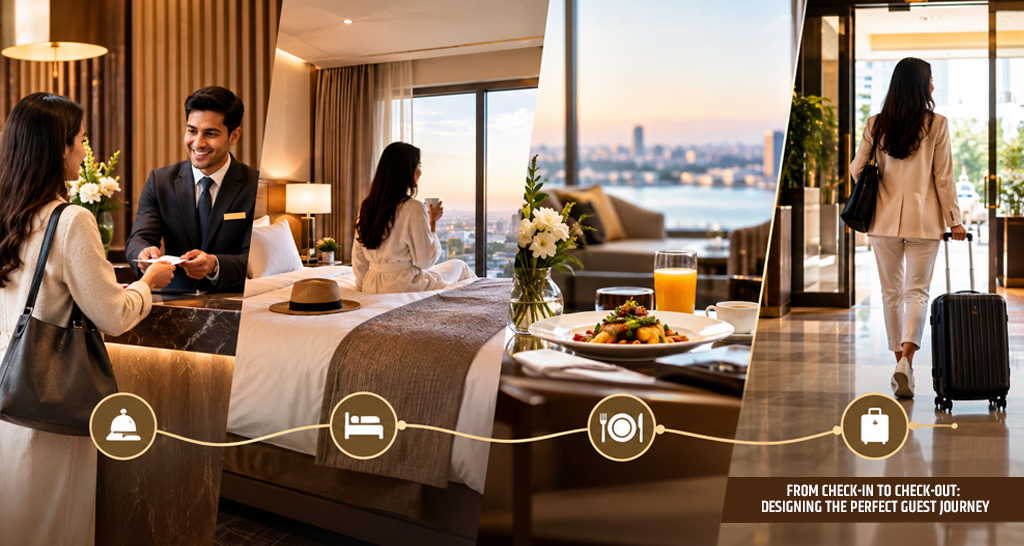
The guest experience in hospitality begins long before a traveler arrives at a hotel and continues well beyond the moment they check out. Every interaction, from the first online search to the final farewell, influences how guests perceive a property, evaluate its service, and decide whether they will return.
In today’s competitive hospitality industry, delivering exceptional accommodation and premium amenities is no longer the only priority. Hotels must create a seamless, personalized, and memorable journey that anticipates guest needs, minimizes friction, and builds lasting relationships.
The perfect guest journey is not defined by a single outstanding moment. It is created through a series of thoughtful experiences that make guests feel welcomed, valued, and cared for at every stage of their stay.
Understanding the Modern Hotel Guest Journey
The hotel guest journey encompasses every stage of a traveler’s relationship with a property. It begins with discovering the hotel and researching its services, continues through booking and the on-property experience, and extends into post-stay communication.
Each stage presents an opportunity for hotels to build trust, demonstrate value, and strengthen the guest relationship.
A well-designed journey typically includes five key stages: pre-arrival, arrival and check-in, the in-stay experience, check-out, and post-stay engagement. When these stages work together, the experience feels consistent rather than disconnected.
1. Before Arrival: Creating the Right First Impression
The guest journey often begins online. A traveler may discover a hotel through a search engine, social media, a travel platform, or a recommendation from friends and colleagues.
At this point, clear information, attractive photography, transparent pricing, and a straightforward booking process can make a significant difference.
Hotels should ensure that their websites are easy to navigate, room descriptions are accurate, policies are clearly communicated, and booking systems work smoothly across devices.
Once a reservation is confirmed, communication becomes equally important. A personalized confirmation email, useful arrival information, transportation guidance, and details about available amenities can help guests feel prepared and confident about their stay.
Hotels can also invite guests to share relevant preferences in advance, such as dietary requirements, accessibility needs, or special occasions. These details allow teams to prepare thoughtfully without overwhelming travelers with unnecessary messages.
The objective is simple: remove uncertainty before the guest even reaches the property.
2. Arrival and Check-In: Making Guests Feel Welcome
Arrival is one of the most important moments in the hotel experience. After a long journey, guests typically want a welcome that is efficient, warm, and effortless.
Long queues, unclear instructions, and repeated requests for information can create frustration before the stay has properly begun.
Hotels can improve this stage by offering digital check-in options, preparing reservations in advance, coordinating luggage assistance, and ensuring front-desk employees have the information they need.
However, efficiency should not come at the expense of genuine hospitality.
A friendly greeting, attentive communication, and a willingness to assist can make guests feel recognized from the beginning. For returning guests, acknowledging their previous visits or relevant preferences can create a stronger sense of familiarity.
Luxury properties may also enhance arrival through welcome refreshments, personalized room details, or tailored recommendations.
The most effective arrival experience combines operational efficiency with human warmth.
3. During the Stay: Delivering Consistent, Personalized Service
Once guests reach their rooms, the quality and consistency of service become central to their overall experience.
Cleanliness, room comfort, maintenance, dining quality, and responsiveness to requests are fundamental expectations. When these essentials are handled well, hotels create the foundation for a positive stay.
The next step is personalization.
A business traveler may appreciate a quiet workspace and reliable connectivity, while a family may value flexible dining options and activities for children. Guests celebrating a special occasion may welcome a thoughtful gesture that reflects the purpose of their visit.
Hotels can use guest preferences and feedback to make services more relevant, provided personal information is handled responsibly.
Consistency is equally important. A warm welcome loses its impact if housekeeping is unreliable or service requests remain unanswered. Every department must contribute to the same standard of care.
Exceptional hospitality happens when personalized attention is supported by dependable operations.
4. Using Technology to Improve the Guest Experience
Technology is transforming the way hotels manage guest interactions. Mobile applications, digital concierge services, automated messaging, smart-room controls, and artificial intelligence can make the guest journey more convenient.
Guests may use digital tools to request extra towels, book restaurant tables, explore local attractions, or communicate with hotel staff without waiting in line.
For hotel teams, integrated systems can help organize requests, improve coordination between departments, and identify recurring service issues.
However, technology should simplify hospitality rather than make it impersonal.
Guests should have access to human assistance whenever they need it, especially when dealing with complex requests or unexpected problems. Hotels must also protect guest data and avoid collecting information that is unnecessary for delivering the service.
The strongest approach combines digital convenience with the flexibility and empathy of well-trained employees.
5. Turning Ordinary Moments Into Memorable Experiences
Guests often remember the details that make a stay feel different from an ordinary hotel visit.
These moments do not always require significant investment. A thoughtful restaurant recommendation, assistance with an unexpected travel problem, a personalized note, or a carefully arranged celebration can create a lasting impression.
Hotels can also help guests connect with their destination through local cuisine, cultural activities, heritage tours, and partnerships with community businesses.
Such experiences give travelers reasons to remember the property beyond its rooms and facilities.
The key is relevance. A gesture becomes meaningful when it reflects an understanding of the guest rather than following a standard script.
By empowering employees to recognize opportunities for thoughtful service, hotels can create authentic experiences without making every interaction feel staged.
6. Check-Out: Ending the Stay on a Positive Note
Check-out is the final major interaction during the guest’s visit, and it can significantly influence the overall impression of the stay.
Complicated billing, unexpected charges, or delays can undermine an otherwise positive experience. Hotels should make the process transparent, efficient, and easy to navigate.
Express check-out, digital invoices, clear explanations of charges, and assistance with transportation can reduce unnecessary stress.
Employees should also be prepared to listen if a guest raises a concern. A problem handled professionally and promptly can help restore confidence and demonstrate the hotel’s commitment to service.
A sincere farewell matters, too. Acknowledging the guest’s stay and offering appropriate assistance with departure can ensure the final interaction feels as considered as the welcome.
The goal is to leave guests with a positive final impression and a clear reason to consider returning.
7. After Check-Out: Building Long-Term Guest Relationships
The guest journey does not end when the room key is returned.
Post-stay communication gives hotels an opportunity to understand guest satisfaction, address concerns, and maintain a relationship beyond the visit.
A well-timed thank-you message, a short feedback survey, or a response to a guest review can demonstrate that the hotel values the entire experience, not just the booking.
Guest feedback should also inform operational improvements. If multiple travelers report slow check-in, inconsistent housekeeping, or difficulties with restaurant reservations, these patterns can help management identify where changes are needed.
Loyalty programs and personalized offers may encourage repeat bookings when they are relevant to the guest’s interests. However, communication should remain useful and respectful rather than becoming excessive.
By treating feedback as an opportunity to improve, hotels can turn individual stays into long-term relationships.
8. Measuring the Success of the Guest Journey
Designing a better guest journey requires more than collecting positive reviews. Hotel leaders need to understand how guests experience each stage and where friction occurs.
Useful performance indicators include:
-
Guest satisfaction scores: Measure overall perceptions of the stay.
-
Guest review sentiment: Identify recurring praise and complaints.
-
Check-in and check-out times: Evaluate the efficiency of arrival and departure.
-
Service response times: Track how quickly guest requests are handled.
-
Guest complaint resolution: Assess how effectively problems are addressed.
-
Repeat booking rates: Understand whether guests choose to return.
-
Guest loyalty and recommendation measures: Evaluate willingness to recommend the property.
These indicators are most useful when considered together. A high satisfaction score, for example, may not reveal the specific operational issues that could affect future visits.
Hotels should combine performance data with employee observations and direct guest feedback to identify meaningful improvements.
9. The Role of Leadership in Designing a Seamless Journey
A successful guest journey depends on collaboration across the entire hotel.
Reservations, front office, housekeeping, food and beverage, maintenance, concierge, and management teams must share information and coordinate their efforts. When departments operate in isolation, guests may experience delays, repeated questions, and inconsistent service.
Hotel leaders can address these challenges by establishing clear service standards, improving communication between departments, investing in employee training, and empowering staff to resolve routine problems.
Leadership also sets the culture in which hospitality is delivered. Employees who feel supported and trusted are better positioned to respond to guests with confidence, professionalism, and empathy.
Ultimately, the guest journey is not owned by a single department. It is a shared responsibility that requires every team to work toward the same objective.
Conclusion: Every Interaction Shapes the Experience
From the first online search to the final farewell, every interaction contributes to how guests remember a hotel.
A seamless booking process, a warm welcome, reliable service, thoughtful personalization, efficient departure, and meaningful follow-up all play a role in creating a positive experience.
For hospitality businesses, the opportunity lies in connecting these individual moments into one consistent journey. Technology can reduce friction, data can improve decision-making, and well-trained employees can bring genuine warmth to every interaction.
The perfect guest journey is not about making every moment extravagant. It is about making every moment feel effortless, considered, and connected.
Hotels that approach guest experience as a continuous relationship rather than a series of transactions can build stronger loyalty, encourage positive recommendations, and differentiate themselves in an increasingly competitive hospitality market.
In the end, guests may arrive for the destination, the facilities, or the promise of luxury. What encourages them to return is often the feeling that the hotel understood their needs and made their stay genuinely worthwhile.