The Evolution of Modern Urban Living
Cities around the world are undergoing a remarkable transformation. Rapid urbanization, population growth, technological advancements, and changing lifestyle expectations are reshaping how urban environments are planned, developed, and managed.
Traditional approaches to real estate development, which primarily focused on constructing residential, commercial, and industrial properties, are gradually evolving toward more integrated and technology-driven urban ecosystems.
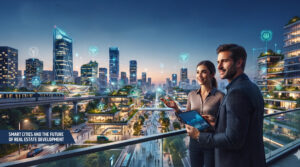
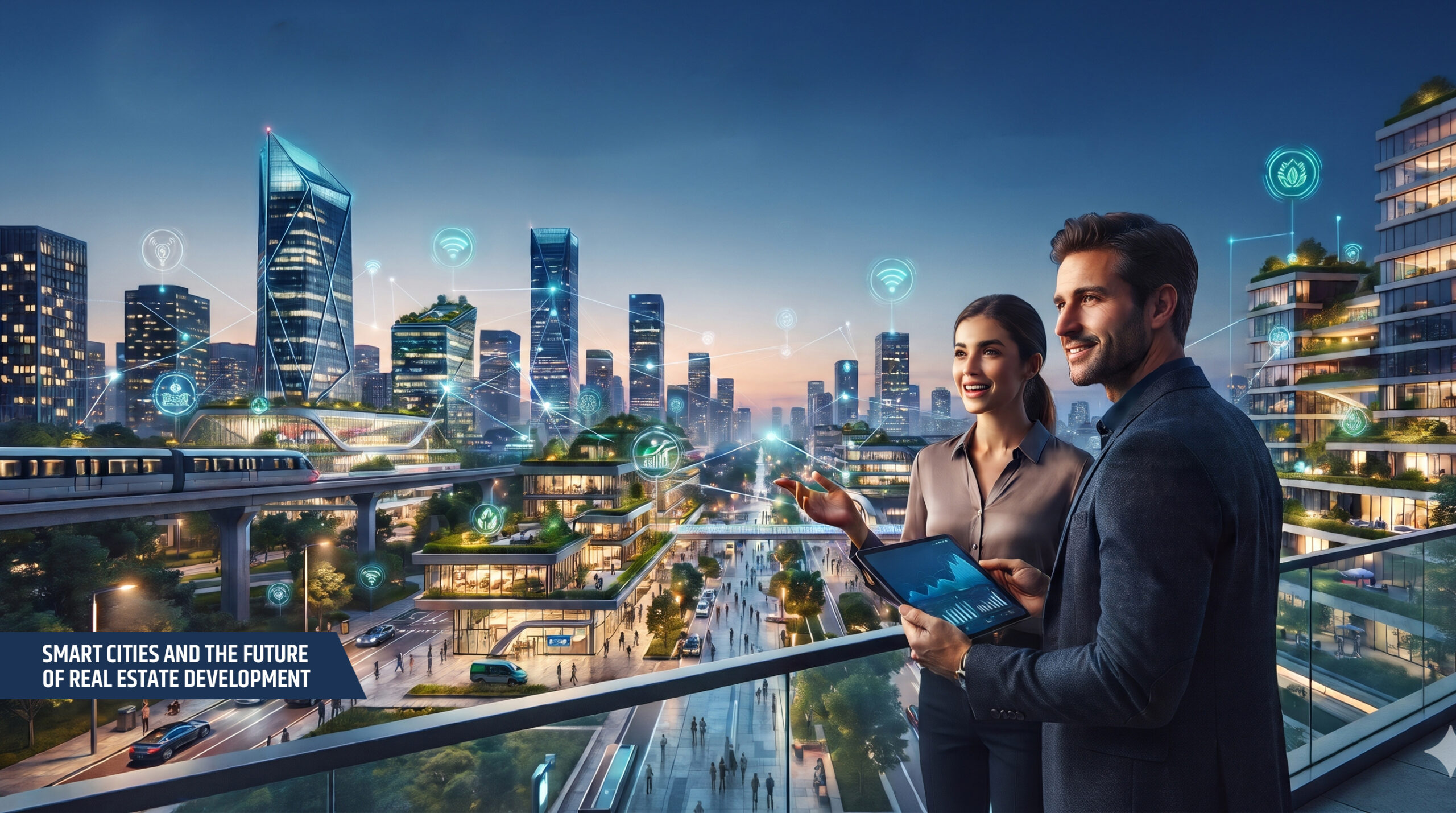
Smart cities represent the next stage of this transformation. By combining advanced technologies, sustainable infrastructure, intelligent transportation, digital connectivity, and efficient resource management, these cities aim to create environments that improve the quality of life while supporting long-term economic development.
For the real estate industry, this evolution presents significant opportunities. Developers, investors, architects, and urban planners are increasingly considering how technology and sustainability can influence property value, infrastructure planning, and future demand.
As cities become more connected and intelligent, the relationship between real estate development and urban innovation will become increasingly important.
1. Understanding the Concept of Smart Cities
A smart city uses digital technologies, connected infrastructure, and data-driven systems to improve urban services and resource management.
These technologies can support various aspects of city life, including transportation, electricity distribution, water management, waste collection, public safety, and urban planning.
The objective is not simply to introduce advanced technology into existing cities. It is to develop more efficient, sustainable, accessible, and responsive urban environments.
Smart city development often involves collaboration between government authorities, private developers, technology companies, infrastructure providers, and local communities.
For the real estate sector, smart city initiatives can influence where properties are developed, how buildings are designed, and which locations become attractive for residential and commercial investment.
2. Smart Infrastructure: Building the Foundation for Future Cities
Infrastructure is one of the most important elements of smart city development.
Modern urban environments require reliable transportation networks, efficient energy systems, dependable water supplies, digital connectivity, and well-planned public spaces.
Smart infrastructure integrates technology into these essential services to improve operational efficiency and long-term performance.
For example, intelligent traffic management systems can help monitor congestion and improve transportation planning. Smart electricity grids can support more efficient energy distribution, while connected water management systems can help identify leaks and monitor consumption.
For real estate developers, infrastructure quality is a critical consideration when evaluating development opportunities.
Locations with reliable connectivity, efficient transportation, and access to essential services can become more attractive to residents, businesses, and investors.
As a result, infrastructure development is increasingly influencing the long-term potential of urban real estate markets.
3. Smart Buildings: Transforming the Future of Real Estate
Smart buildings are becoming an important part of modern property development.
These buildings use connected devices, automation systems, sensors, and intelligent management platforms to improve building operations and occupant experiences.
Technologies such as automated lighting, smart temperature controls, digital access systems, energy monitoring, and predictive maintenance are transforming how residential and commercial properties function.
For property owners, these technologies can help improve operational efficiency and manage building resources more effectively.
For residents and employees, smart building features can provide greater convenience, comfort, security, and control over their surroundings.
Developers are increasingly exploring smart building solutions as a way to differentiate their properties and meet the expectations of technology-conscious buyers and tenants.
However, successful implementation requires careful planning, reliable digital infrastructure, cybersecurity protections, and long-term maintenance strategies.
4. Sustainable Development and Green Real Estate
Sustainability is becoming a central consideration in the future of real estate development.
As cities expand, pressure on energy resources, water supplies, transportation systems, and natural environments continues to increase.
Smart city planning encourages developers to consider environmental performance throughout the property development process.
Green buildings can incorporate energy-efficient lighting, improved insulation, renewable energy systems, water-saving technologies, and environmentally responsible construction materials.
Urban developments can also benefit from green spaces, pedestrian-friendly streets, cycling infrastructure, and accessible public transportation.
These features can contribute to more comfortable urban environments while supporting resource efficiency.
For real estate companies, sustainability is increasingly connected to long-term asset performance, operational costs, regulatory expectations, and investor considerations.
The future of real estate will increasingly depend on balancing development ambitions with environmental responsibility.
5. Artificial Intelligence and Data-Driven Urban Planning
Artificial intelligence and data analytics are creating new opportunities for smarter urban development.
Modern cities generate large amounts of information through transportation systems, public infrastructure, connected devices, commercial activities, and digital platforms.
AI-powered analytics can help urban planners understand population movement, identify infrastructure requirements, evaluate traffic patterns, and assess resource consumption.
In real estate, data-driven tools can support market research, property valuation, site selection, demand forecasting, and development planning.
Developers can use digital information to better understand neighborhood characteristics, infrastructure availability, and changing customer preferences.
Digital twins are another emerging technology in this field. They create virtual representations of physical buildings or urban environments, allowing planners and developers to model different scenarios and examine potential outcomes.
By combining data analytics with advanced planning tools, real estate professionals can make more informed development decisions.
6. Smart Transportation and Transit-Oriented Development
Transportation infrastructure plays a major role in determining the attractiveness and long-term potential of real estate locations.
Smart cities are increasingly integrating intelligent traffic systems, electric vehicle infrastructure, public transportation networks, and connected mobility solutions.
One important development approach is transit-oriented development (TOD), which focuses on creating residential, commercial, and mixed-use developments around major public transportation networks.
This approach can improve accessibility, reduce dependence on private vehicles, and encourage more efficient land use.
For real estate developers, properties located near metro stations, railway networks, bus corridors, and other transportation facilities can offer convenient access to employment centers, educational institutions, retail destinations, and essential services.
In India, expanding urban infrastructure and transit-oriented development are becoming important considerations in long-term real estate planning.
2026+1
7. The Growing Importance of Mixed-Use Developments
Modern urban lifestyles are creating greater demand for developments that combine residential, commercial, retail, recreational, and hospitality facilities within connected environments.
Mixed-use developments are designed to bring different aspects of daily life closer together.
Residents may have access to shopping centers, restaurants, offices, healthcare facilities, fitness centers, and entertainment spaces within the same development or surrounding neighborhood.
These projects can support more integrated urban communities while creating opportunities for developers to diversify property offerings.
For investors, mixed-use developments may also provide exposure to different real estate segments, including residential leasing, commercial offices, and retail operations.
However, successful projects require careful planning, market research, infrastructure capacity, and an understanding of the needs of different user groups.
8. The Role of Smart Cities in Attracting Real Estate Investment
Smart city development can influence investor interest by improving infrastructure, connectivity, access to services, and the overall attractiveness of urban locations.
Investors increasingly evaluate more than the physical characteristics of a property. They also consider the surrounding infrastructure, economic activity, transportation access, sustainability features, and long-term development potential.
Technology-enabled property management and energy-efficient buildings may also influence investment decisions.
For institutional investors and real estate companies, smart city initiatives can create opportunities in residential developments, commercial properties, industrial parks, logistics facilities, and mixed-use projects.
Nevertheless, smart city investment should be evaluated carefully. Technology adoption does not automatically guarantee higher property values or investment returns. Market demand, affordability, infrastructure delivery, governance, and financial feasibility remain essential considerations.
9. Challenges in Developing Smart Cities and Smart Real Estate
Despite the opportunities, smart city development involves several complex challenges that require coordinated planning and investment.
High Infrastructure Costs: Developing advanced transportation systems, digital networks, energy infrastructure, and smart buildings requires significant capital investment.
Data Privacy and Cybersecurity: Connected infrastructure generates large amounts of data, making security and responsible data management essential.
Digital Infrastructure Gaps: Not all urban areas have equal access to reliable connectivity and advanced technological systems.
Affordable Housing: Urban development must ensure that technological progress does not make housing less accessible to lower- and middle-income communities.
Regulatory and Governance Challenges: Smart city projects require coordination between government authorities, private developers, infrastructure providers, and technology companies.
Long-Term Maintenance: Smart infrastructure requires continuous investment, upgrades, technical expertise, and operational management.
Research published in 2026 highlights that successful smart cities depend not only on technology but also on effective governance, public trust, financial feasibility, and social inclusion.
MDPI+1
10. The Future of Real Estate Development in Smart Cities
The future of real estate development will increasingly be shaped by the integration of digital technology, sustainable construction, intelligent infrastructure, and human-centered urban planning.
Artificial intelligence may support property market analysis and development planning. Digital twins may help developers simulate building performance and urban infrastructure scenarios. Smart building management systems may improve operational efficiency, while renewable energy solutions may become more integrated into residential and commercial projects.
Another important development will be the growing focus on adaptable buildings and flexible spaces that can respond to changing business requirements, population patterns, and lifestyle preferences.
Real estate developers will also need to consider climate resilience, water management, green infrastructure, and affordable housing as important components of future urban development.
For industry leaders, the opportunity is to move beyond constructing individual properties and participate in creating connected, sustainable, and economically vibrant urban environments.
Conclusion: Building Smarter Cities for a Better Future
Smart cities are transforming the future of urban development by bringing together technology, infrastructure, sustainability, and modern real estate planning.
As urban populations grow and lifestyle expectations evolve, the demand for well-connected, energy-efficient, and intelligently designed properties is likely to remain an important consideration for developers, investors, and city planners.
From smart buildings and digital infrastructure to sustainable communities and transit-oriented developments, the real estate industry has an opportunity to play a central role in shaping the next generation of urban environments.
However, successful smart city development requires more than technological investment. It demands responsible planning, effective governance, affordable housing, environmental protection, and collaboration between public and private stakeholders.
The future of real estate will not be defined simply by the buildings we construct, but by the intelligent, sustainable, and connected communities we create around them.