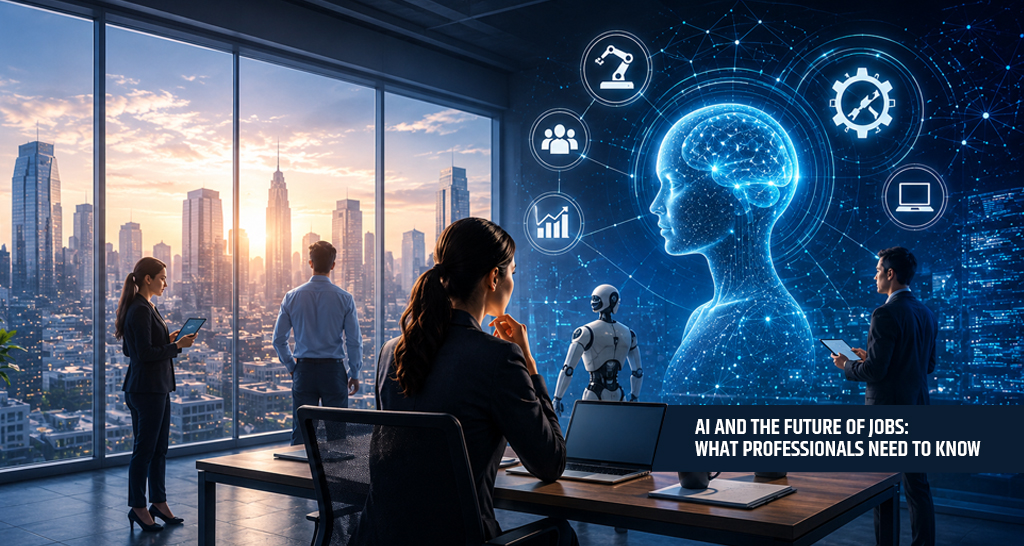
Artificial Intelligence (AI) is no longer a futuristic concept—it is rapidly becoming a part of our daily work lives. From automating repetitive tasks to assisting with complex decision-making, AI is transforming industries across the globe. While some fear that AI will replace human workers, the reality is more nuanced. AI is changing the nature of work, creating new opportunities, and redefining the skills professionals need to succeed.
How AI Is Transforming the Workplace
AI-powered tools are helping businesses improve efficiency, reduce costs, and enhance productivity. Tasks such as data entry, customer support, scheduling, content generation, and data analysis can now be performed faster and more accurately with AI assistance.
Industries experiencing significant AI-driven changes include:
- Healthcare: AI assists in diagnostics, patient care, and medical research.
- Hospitality: AI-powered chatbots, personalized guest experiences, and smart hotel management systems are becoming standard.
- Finance: Automated fraud detection, risk assessment, and financial forecasting are improving decision-making.
- Marketing: AI helps businesses analyze customer behavior, create content, and optimize campaigns.
- Manufacturing: Smart automation and predictive maintenance are increasing operational efficiency.
Will AI Replace Human Jobs?
One of the biggest concerns surrounding AI is job displacement. While AI may automate certain routine and repetitive tasks, it is unlikely to replace human workers entirely. Instead, many jobs will evolve.
Historically, technological advancements have eliminated some roles while creating entirely new professions. AI is expected to follow a similar pattern. Professionals who adapt and learn new skills will be better positioned to thrive in the changing job market.
Emerging Career Opportunities in the AI Era
As AI adoption grows, demand for new job roles is increasing, including:
- AI Specialists and Engineers
- Data Scientists and Analysts
- Machine Learning Experts
- AI Ethics and Compliance Professionals
- Prompt Engineers
- Automation Consultants
- Cybersecurity Specialists
- Digital Transformation Managers
Many of these careers did not exist a decade ago, highlighting how innovation creates new opportunities.
Essential Skills for Future Professionals
To remain competitive in an AI-driven world, professionals should focus on developing skills that complement technology rather than compete with it.
1. Critical Thinking
AI can provide information, but humans are still needed to evaluate, interpret, and make strategic decisions.
2. Creativity
Innovation, storytelling, design, and problem-solving remain uniquely human strengths.
3. Emotional Intelligence
Leadership, empathy, communication, and relationship-building cannot be easily automated.
4. Digital Literacy
Understanding AI tools and digital technologies will become a basic requirement across most professions.
5. Continuous Learning
The future workplace will reward professionals who consistently update their knowledge and adapt to change.
Industries Most Likely to Benefit from AI
Rather than replacing workers, AI is expected to augment human capabilities in sectors such as:
- Healthcare
- Education
- Hospitality
- Retail
- Finance
- Logistics
- Information Technology
- Marketing and Advertising
Professionals who learn how to collaborate with AI tools can significantly increase their productivity and value.
Preparing for the Future
Organizations are already investing heavily in AI technologies, making it essential for employees to embrace change. Professionals should:
- Learn AI fundamentals.
- Explore AI-powered productivity tools.
- Participate in online courses and certifications.
- Develop analytical and strategic thinking skills.
- Stay informed about industry trends.
The future belongs to individuals who can combine human expertise with technological innovation.
Conclusion
AI is not simply replacing jobs—it is transforming them. The most successful professionals will be those who view AI as a tool rather than a threat. By embracing continuous learning, developing uniquely human skills, and adapting to emerging technologies, professionals can unlock new career opportunities and remain relevant in the evolving workplace.
The future of work is not about humans versus AI—it is about humans and AI working together to achieve more than ever before.