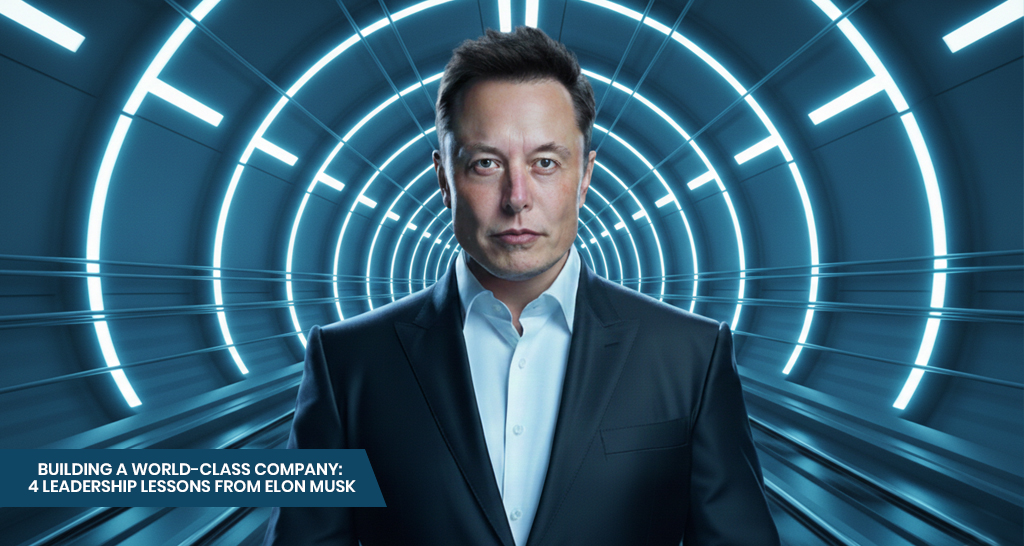
Elon Musk is one of the most influential entrepreneurs of our time. From SpaceX and Tesla to Neuralink and X (formerly Twitter), his companies consistently challenge industries, break limits, and redefine what’s possible. While the technologies may be complex, the leadership lessons behind building such world-class companies are surprisingly clear.
Here are four powerful leadership lessons from Elon Musk that founders, leaders, and professionals can apply to build high-impact organizations.
1. Start With a Mission Bigger Than Money
Elon Musk doesn’t build companies just to make profits—he builds them to solve big, meaningful problems.
-
SpaceX exists to make humanity a multi-planetary species.
-
Tesla aims to accelerate the world’s transition to sustainable energy.
This mission-first mindset attracts top talent, inspires teams during difficult times, and creates long-term focus.
Leadership takeaway:
A strong mission gives people a reason to care. When employees believe they’re working toward something bigger than a paycheck, commitment and performance naturally rise.
2. Think From First Principles, Not Industry Norms
Musk is famous for using first-principles thinking—breaking problems down to their fundamental truths instead of following “how things are usually done.”
At SpaceX, this approach reduced rocket costs dramatically by rethinking materials, manufacturing, and reusability—something the space industry believed was nearly impossible.
Leadership takeaway:
Don’t blindly follow industry standards. Question assumptions, simplify problems, and rebuild solutions from the ground up. Innovation often comes from challenging accepted limits.
3. Hire Exceptional Talent and Set High Standards
Elon Musk believes that a small group of exceptional people can outperform large average teams. He hires individuals who are deeply passionate, technically strong, and willing to work through extreme challenges.
At the same time, expectations are very high—performance, accountability, and ownership are non-negotiable.
Leadership takeaway:
Focus on quality over quantity. Build a team of problem-solvers, empower them with responsibility, and hold everyone—including yourself—to high standards.
4. Embrace Failure as Part of the Process
SpaceX rockets didn’t succeed overnight. Early launches failed publicly and repeatedly. Instead of giving up, Musk treated each failure as a learning opportunity, improving designs rapidly until success followed.
This culture of experimentation allows faster innovation and long-term breakthroughs.
Leadership takeaway:
Failure is not the enemy—fear of failure is. Encourage calculated risk-taking, learn quickly from mistakes, and create an environment where innovation is safe.
Conclusion
Building a world-class company isn’t about having the perfect plan—it’s about having the right mindset. Elon Musk’s leadership shows that bold vision, first-principles thinking, exceptional talent, and resilience in the face of failure are key ingredients for long-term success.
Whether you’re a startup founder, manager, or aspiring leader, these lessons can help you build not just a successful company—but a meaningful and enduring one.