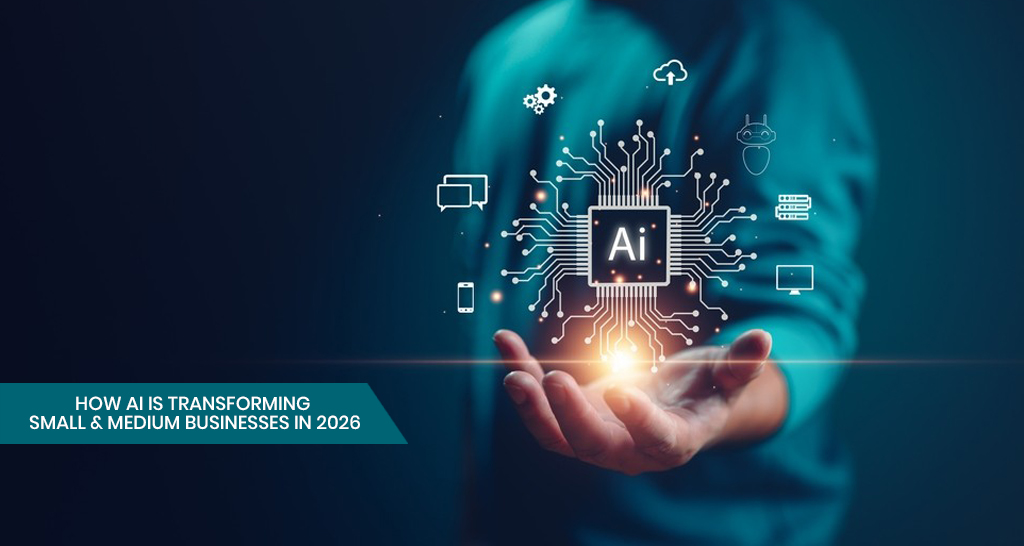
In 2026, artificial intelligence (AI) is no longer a futuristic concept or a luxury reserved for large corporations. It has become a practical, high-impact tool empowering small and medium businesses (SMBs) to compete, innovate, and grow like never before. From automating routine tasks to creating personalised customer experiences, AI is reshaping how SMBs operate — and unlocking opportunities that were previously out of reach.
1. AI Makes Everyday Operations Smarter
For many SMBs, the biggest immediate benefit of AI in 2026 is boosting efficiency:
• Automation of Routine Work
AI tools now automate recurring tasks such as invoicing, scheduling, payroll, and customer support. This helps businesses save time and reduce costs, letting teams focus on strategy or creative work instead of repetitive chores.
• Predictive Analytics for Smarter Decisions
AI systems can now analyse past sales, customer behaviour, inventory levels, and more. Using predictive analytics, SMBs can forecast demand, manage stock, plan staffing, and reduce waste — even with limited historical data.
2. Personalised Customer Experiences at Scale
One of AI’s most exciting roles is in understanding and engaging customers:
• Advanced Personalisation
AI tools help SMBs tailor messaging, product recommendations, and promotions to specific customer preferences. This level of personalisation was once only possible for large brands — now even tiny businesses can deliver it.
• AI-Powered Support
Chatbots and virtual assistants can handle customer queries 24/7, provide instant help, and streamline support workflows — improving satisfaction while reducing staff burden.
3. Marketing & Content Creation Gets a Boost
Marketing is another area experiencing a dramatic shift thanks to AI:
-
Content generation tools help small teams produce social media posts, blogs, newsletters, and ad copy faster — often at a fraction of the usual time and cost.
-
AI-driven analysis optimises campaigns based on real engagement data, meaning businesses can invest smarter and grow their audience more efficiently.
With AI, SMBs can participate in digital marketing with the precision and consistency of much larger competitors.
4. Lower Barriers to Innovation
AI isn’t just for tech companies anymore. Thanks to affordable software and ready-to-use platforms:
-
Even micro-businesses can use AI tools without deep technical expertise.
-
Cloud-based AI services remove the need for expensive infrastructure.
This democratization of AI is helping smaller players innovate, launch new services, and experiment with data-driven strategies.
5. Challenges Still Remain — But Solutions Are Emerging
Despite the progress, SMBs still face hurdles in AI adoption:
• Skill Gaps & Training Needs
Many owners and employees lack confidence or expertise to deploy AI effectively. This highlights the need for training programmes and accessible resources.
• Integration with Legacy Systems
Older software tools don’t always integrate smoothly with AI systems, slowing adoption. Choosing compatible platforms or using middleware can ease this transition.
• Cost & Resource Constraints
Initial costs — for software, tools, or hiring specialists — can be daunting. However, scalable AI tools designed for SMBs are reducing the upfront burden, making solutions more accessible than ever.
6. AI Levels the Competitive Playing Field
Perhaps the most transformative effect of AI is competitive advantage:
-
SMBs can now operate at speeds and scales previously reserved for much larger companies.
-
AI enables data-driven strategy, personalised marketing, and robust customer support — all without massive budgets.
In 2026, AI isn’t just helping SMBs survive — it’s helping them thrive in an increasingly competitive marketplace.
Conclusion
Artificial Intelligence has shifted from a cutting-edge trend to a business necessity for small and medium enterprises in 2026. By automating tasks, enhancing customer engagement, and empowering data-driven decisions, AI is transforming SMBs into more efficient, innovative, and competitive organisations.
While challenges like training, integration, and costs still persist, the rapid evolution of AI tools tailored for SMBs means that business leaders who embrace AI today are positioning themselves for long-term success tomorrow.