
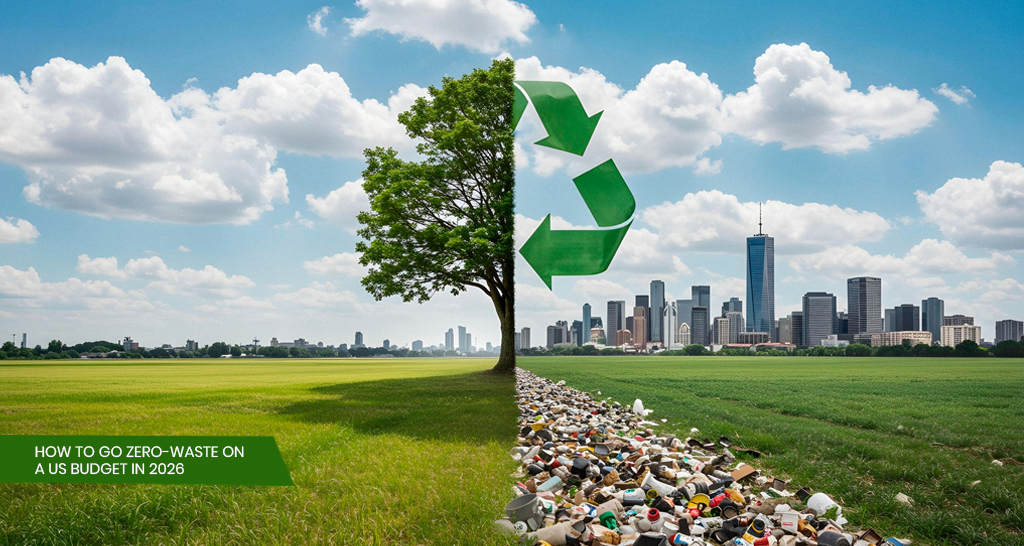
Living a zero‑waste lifestyle in the United States in 2026 doesn’t have to be expensive or extreme. In fact, many Americans are discovering that reducing waste actually saves money over time thanks to fewer disposable products, less food thrown away, and smarter shopping habits. The goal is not perfection but progress: consistently cutting out unnecessary packaging, reusing what you already own, and choosing high‑value, long‑lasting items that pay for themselves.
1. Start with a mindset shift (and a trash audit)
Before spending a dime, shift your mindset from “buying more eco‑products” to “buying less and wasting less.” A simple way to begin is to do a one‑week trash audit: keep all your non‑recyclable trash in a visible bag where you can see how much you actually throw away. This often reveals obvious patterns—plastic bags, single‑use cups, snack wrappers, and half‑eaten food—which become your first targets for change.
From there, set a realistic baseline: aim to reduce your household trash by 30–50% in the first 3–6 months instead of demanding “zero” immediately. This makes the process feel manageable and gives you room to experiment without guilt.
2. Reuse what you already own
One of the most budget‑friendly zero‑waste moves is to repurpose items you already have instead of buying new “eco” products.
-
Use old jars, glass bottles, and Tupperware as containers for leftovers, bulk pantry items, and DIY cleaners.
-
Turn old T‑shirts and towels into rags instead of buying paper towels.
-
Reuse paper bags, envelopes, and packaging for notes, crafts, or small storage.
This “repair and reuse” mentality is at the heart of sustainable living and can drastically cut how much you throw away without adding costs.
3. Smart grocery shopping on a US budget
In the US, most people spend a big portion of their budget on food, which is also one of the biggest sources of waste. To align groceries with a zero‑waste lifestyle:
-
Plan meals weekly and stick to a shopping list so you don’t buy more than you can eat.
-
Buy in bulk at stores that allow you to bring your own jars, cloth bags, and containers for items like rice, pasta, beans, spices, nuts, and cereal. This avoids plastic packaging and often costs less per pound than pre‑packaged versions.
-
Choose loose produce instead of items wrapped in plastic, and bring reusable produce bags or old pillowcases.
-
Buy local and seasonal when possible; in many US cities, farmers markets or local co‑ops accept reusable bags and containers, and the food is often cheaper and fresher.
By focusing on whole, unpackaged foods and planning ahead, many households report a noticeable drop in their grocery bill after the first few months.
4. Cut food waste with simple systems
Even people who buy food carefully can end up tossing leftovers. Reducing food waste is one of the most effective ways to save money and lower your environmental impact.
-
Use every part of food when you can: save vegetable scraps for broth, freeze overripe fruit for smoothies, and repurpose leftovers into soups, stir‑fries, or casseroles.
-
Label and organize your fridge and pantry so you can see what’s close to expiring and use it first.
-
Start a simple compost system: in many US cities, you can use a countertop compost bin to collect food scraps, then drop them off at a local compost site or drop‑off point. If you have a small yard, a basic backyard bin or tumbling composter can turn scraps into soil for gardens or planters.
Food‑waste‑reduction alone can save many households hundreds of dollars per year while significantly cutting what they throw away.
5. Low‑cost, high‑impact swaps for the kitchen
You don’t need to buy every “eco” product online to make a difference. A few strategic, reusable upgrades can quickly pay for themselves.
Essential budget‑friendly swaps for a zero‑waste‑leaning kitchen:
-
Reusable water bottle and coffee/tea mug (metal or glass) to replace disposable cups and bottles.
-
Reusable shopping bags and produce bags (cloth or mesh) to avoid plastic at the grocery store.
-
Silicone food covers or beeswax wraps to replace plastic wrap.
-
Glass or stainless jars for storing leftovers, snacks, and pantry items.
-
Reusable dishcloths and sponges instead of paper towels.
Most of these items can be bought gradually, often from discount stores or secondhand, and each one replaces dozens of disposable products over time.
6. Bathroom and cleaning: reduce packaging without overspending
Personal‑care and cleaning products are another big source of single‑use plastic. In the US, simple swaps can make a big difference without a luxury price tag.
-
Choose bar soap, shampoo bars, and solid deodorant instead of bottled liquids. These often last longer, use minimal packaging, and are usually cheaper over time.
-
Use DIY or concentrated refill cleaners such as vinegar, baking soda, and castile soap in reusable spray bottles, instead of buying new plastic bottles every few weeks.
-
Switch to reusable cotton rounds or makeup‑removal cloths instead of single‑use wipes.
If you prefer brand‑name products, look for brands that offer refill pouches, bulk sizes, or return‑for‑recycle programs, which usually cut packaging and cost per use.
7. Clothes, electronics, and big‑ticket items
In the US, fashion and gadgets are major contributors to waste. A zero‑waste‑friendly approach here is mostly about buying less and choosing wisely.
-
Thrift, swap, or buy secondhand clothing from local thrift stores, consignment shops, or online marketplaces. This reduces demand for new fast‑fashion items and keeps good clothes in circulation.
-
Repair and maintain clothes, shoes, and small electronics instead of replacing them immediately.
-
When you do buy new, invest in higher‑quality, durable items that are built to last, even if the upfront cost is a bit higher.
These habits slow down your consumption cycle and can noticeably reduce what ends up in landfills each year.
8. Respect the US waste‑management system
In many American cities, recycling and composting programs are expanding, but rules vary by area. To make the most of what’s available:
-
Check your local recycling guidelines online and label bins at home so everyone in the house knows what can go where.
-
Rinse containers, avoid “wish‑cycling” (tossing questionable items in the bin hoping they’re recyclable), and follow local rules to reduce contamination.
-
If your city offers curbside compost, sign up for it and use it for food scraps and compost‑friendly packaging.
Working with your local system instead of fighting it makes zero‑waste living much easier and more realistic on a budget.
9. Measure your progress and keep it sustainable
To stay motivated, track your progress in ways that matter to you:
-
How full is your trash can at the end of the week?
-
How much money did you save by buying less packaged food and fewer disposables?
-
How many reusable items did you add, and how often do you actually use them?
By treating zero‑waste as a flexible, budget‑conscious habit rather than a rigid rulebook, you can build a lifestyle in 2026 that’s both eco‑friendly and financially smart for a typical US household.